
By Engi | Chemical Engineer, BS | Engineering Manager
Last Updated: February 5, 2026
Note: This post contains affiliate links (disclaimer).
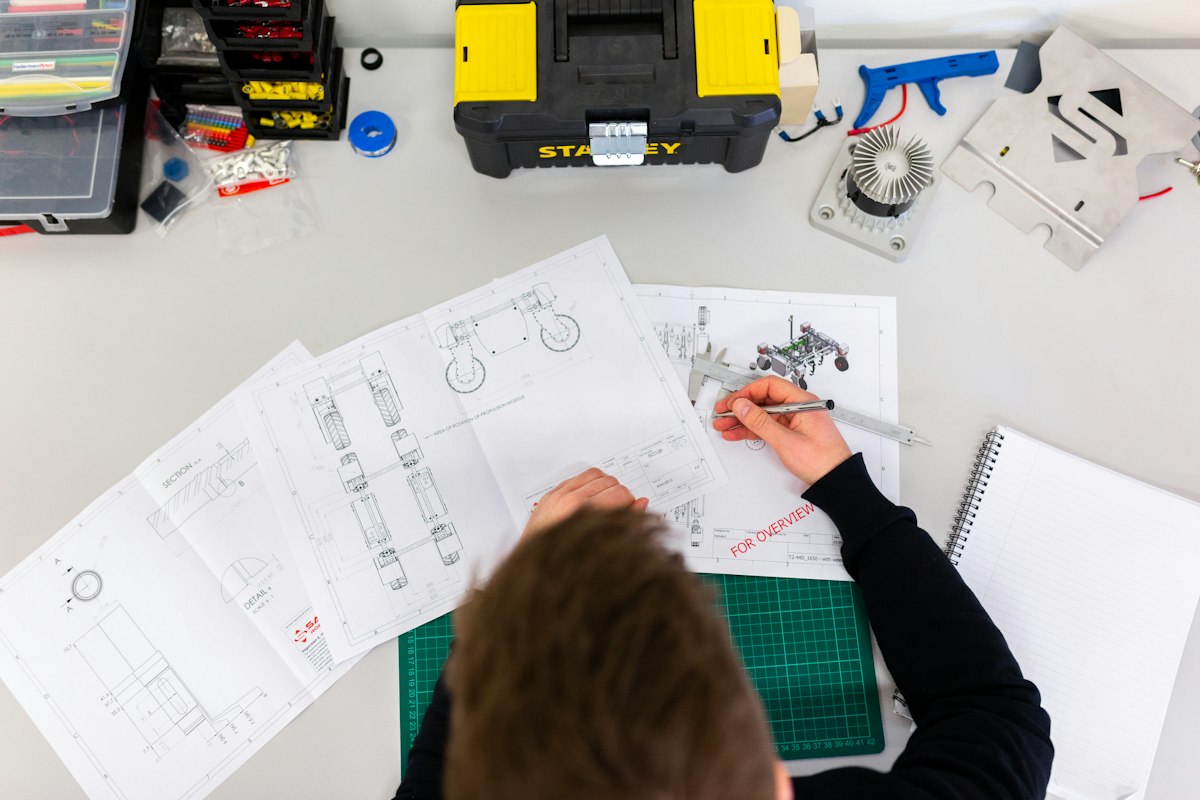
There’s something fundamentally different about engineering as a hobby versus engineering as a day job. At work, you follow specifications, deal with deadlines, and compromise for practicality. At home? You build exactly what you want, take the long way to learn something new, and embrace projects that exist purely because they’re interesting. See Instructables for details.
This guide covers DIY engineering projects for adults and serious enthusiasts—people who know which end of a soldering iron gets hot and want to build things that actually work. From $50 component kits to $1,000+ fabrication equipment, these gifts enable real engineering projects across programming, mechanical, electrical, and chemical disciplines.
Whether you’re buying for someone starting their home lab or a seasoned maker looking to expand capabilities, these projects combine learning with making. No toys, no oversimplified kits—just tools and projects for building real things.
–
Programming & Embedded Systems
Modern DIY projects inevitably involve code. Whether controlling motors, reading sensors, or processing data, programming brings projects to life.
Microcontroller Development
ESP32 Development Board Variety Pack ($40-70)
Multiple ESP32 boards with different capabilities: standard, camera, display, low-power variants. WiFi and Bluetooth built-in. Program in Arduino IDE, MicroPython, or ESP-IDF. Perfect for IoT projects, home automation, sensor networks. Having multiple boards means experimenting fearlessly.
STM32 Development Kit with Debugger ($40-80)
ARM Cortex-M microcontrollers used in professional embedded systems. More complex than Arduino but teaches industry-standard tools. Includes ST-Link debugger for real debugging (not print statements). Program in C/C++ with professional IDEs.
Teensy 4.1 Development Board ($30-50)
Incredibly powerful microcontroller in tiny package. 600MHz ARM processor, USB host, Ethernet, SD card. Audio processing, real-time control, complex projects. Arduino-compatible but much more capable. Favorite of audio synthesis enthusiasts.
Single Board Computers
Raspberry Pi 5 (8GB) Kit ($120-180)
Latest Pi with serious performance. Build home servers, automation hubs, media centers, development environments. Not a toy—many production systems run on Pis. Include quality power supply and fast SD card for reliability.
NVIDIA Jetson Orin Nano ($500-700)
GPU-accelerated computing for AI at the edge. Run neural networks, computer vision, autonomous systems. This is professional-grade hardware for AI development. Serious investment but enables projects impossible on regular computers.
Alternative SBCs (Rock Pi, Orange Pi, etc.) ($40-120)
Raspberry Pi alternatives offering different features: more GPIO, better graphics, higher performance, lower price. Good for specific use cases or when Pis are out of stock. Less community support but expanding rapidly.
Software Defined Radio
HackRF One SDR Transceiver ($300-400)
Transmit and receive radio frequencies from 1MHz to 6GHz. Analyze wireless protocols, reverse engineer RF systems, experiment with radio communication. Open source hardware and software. This tool opens an invisible world.
RTL-SDR V4 Receiver Kit ($40-60)
Budget SDR for receiving only. Decode ADS-B aircraft transponders, listen to weather satellites, analyze wireless signals. Incredible value for RF exploration. Gateway drug to serious RF engineering.
Mechanical Engineering & Fabrication
Making physical things requires tools. Start with essentials, build capabilities over time. Quality tools last decades.
3D Printing
Bambu Lab P1S 3D Printer ($600-800)
Exceptional print quality with minimal tinkering. Fast, reliable, multi-material capable. Enclosed chamber for engineering plastics (ABS, ASA, PC). This printer works instead of becoming a project itself. Professional results without professional headaches.
Prusa MK4 3D Printer ($800-1,100)
Industry standard for home/small business. Exceptional support, constant updates, large community. Available as kit (save money, learn mechanics) or assembled. Input shaping for fast prints without compromising quality.
Resin 3D Printer (4K/8K) ($300-600)
Incredible detail for miniatures, jewelry, dental models, engineering parts requiring precision. Different process than FDM—messy but worth it for detail. Requires ventilation and proper resin handling. Complement to, not replacement for, FDM printer.
CNC Machines
Desktop CNC Router (3018/3040) ($300-500)
Mill wood, plastic, aluminum, PCBs. Learn CAM programming, toolpaths, feeds and speeds. Limited work area but sufficient for many projects. Expandable with better spindles, limit switches, enclosures. Entry to subtractive manufacturing.
Shapeoko 4 CNC Router ($1,300-2,000)
Serious hobbyist machine. Cut aluminum reliably, large work area, rigid construction. Make furniture, enclosures, parts. This is a real tool, not a toy. Many small businesses start here.
K40 Laser Cutter with Upgrades ($400-800)
40W CO2 laser for cutting and engraving. Cut wood, acrylic, leather, paper. Engrave designs, create enclosures, make gifts. Requires upgrades (better PSU, safety interlocks, air assist) but unbeatable value. Active community provides upgrade guides.
Metalworking
Mini Metal Lathe (7×16 or 8×16) ($600-1,200)
Turn metal parts: bushings, axles, spacers, custom fittings. Variable speed, change gears, tool post. Small but capable. Makes parts impossible to buy. Steep learning curve but incredibly rewarding. Consider as major tool investment.
Benchtop Milling Machine ($800-2,000)
Mill flat surfaces, cut slots, drill precise holes. More versatile than lathe for many projects. Heavy, requires solid bench. Pair with digital readout (DRO) for precision. Game-changer for custom fabrication.
TIG Welder (AC/DC) ($600-1,200)
Weld aluminum, stainless, steel. Clean, precise welds for fabrication projects. AC for aluminum, DC for steel. Learning curve is real but results are beautiful. Turn metal stock into custom structures.
Measurement & Inspection
Quality Digital Calipers (Mitutoyo) ($80-150)
Measure to 0.001″ accuracy. Not cheap Amazon calipers that drift. Mitutoyo or Starrett only. This tool touches every project. Buy once, use forever.
Dial Indicator Set with Magnetic Base ($50-120)
Measure runout, alignment, surface flatness. Essential for machine setup and inspection. Magnetic base allows positioning anywhere. Professional results require professional measurements.
Electrical Engineering & Electronics
Building electronics requires tools for design, assembly, and troubleshooting. Start with basics, expand as projects demand.
Essential Test Equipment
Rigol DS1054Z Oscilloscope ($400-500)
The oscilloscope that changed hobbyist electronics. 50MHz bandwidth (hackable to 100MHz), 4 channels, massive screen, deep memory. See what circuits actually do. Debug is 10x easier. This tool transforms troubleshooting from guessing to knowing.
Siglent Function/Arbitrary Waveform Generator ($350-500)
Generate test signals: sine, square, triangle, arbitrary waveforms. Test amplifiers, filters, circuits. Dual channel allows complex testing. Sweeps and bursts for advanced testing.
Programmable Bench Power Supply (30V, 5A) ($150-300)
Adjustable voltage and current limiting. Test circuits safely—current limiting prevents damage. Multiple channels allow complex testing. Digital display shows exact voltage/current. Essential for any electronics work.
PCB Design & Fabrication
PCB Etching Kit ($40-80)
Make PCBs at home: design, print, etch, drill. Immediate prototyping without ordering delays. Messy but educational. Teaches PCB manufacturing firsthand. Good for quick prototypes before professional fabrication.
PCB Isolation Milling Setup ($400-800)
Mill PCBs on desktop CNC. Cleaner than etching, faster iteration. Design and manufacture same day. Mill vias, precise traces, professional results at home.
Note on Professional PCB Fabrication: Services like JLCPCB, PCBWay offer $2-10 PCBs delivered in days. Often cheaper than DIY for final designs. But home fabrication teaches principles and enables rapid iteration.
Soldering & Assembly
High-End Soldering Station ($300-600)
JBC, Hakko FX-951, Weller WX series. Precise temperature control, fast heating, excellent tips. Solder surface-mount components, fine-pitch ICs, delicate work. Quality soldering iron is pleasure to use, cheap one is frustration.
Hot Air Rework Station ($80-200)
Remove and install surface-mount components. Fix mistakes, salvage parts, do professional rework. Essential for modern electronics. Choose station with temperature control and multiple nozzles.
Desktop Reflow Oven ($200-400)
Solder entire PCBs at once. Apply solder paste, place components, bake. Professional assembly at home. Makes small production runs feasible. T962 is popular but needs modifications for reliability.
Component Storage & Organization
SMD Component Storage System ($50-150)
Organize resistors, capacitors, ICs, transistors. Labeled drawers, consistent system. Find components quickly. Professional organization enables complex projects. Invest in good storage early—reorganizing later is painful.

Chemical Engineering & Home Lab
Home chemistry requires responsibility, safety equipment, and proper procedures. But it’s incredibly rewarding and perfectly legal when done correctly.
Laboratory Glassware
Professional Glassware Set (24/40 joint) ($150-300)
Borosilicate glass with ground glass joints. Flasks, condensers, distillation apparatus, separatory funnels. Build complex setups from modular pieces. Standard 24/40 joint size compatible across manufacturers. This is real lab equipment.
Vacuum Filtration Setup ($80-150)
Buchner funnel, filter flask, vacuum pump. Filter precipitates quickly and efficiently. Essential for synthesis and purification. Vacuum pump useful for multiple lab operations.
Soxhlet Extractor ($60-120)
Extract compounds from solid materials. Coffee, essential oils, chemical synthesis. Continuous extraction is elegant chemistry. Understanding this apparatus teaches principles used throughout industry.
Analytical Equipment
Analytical Balance (0.001g precision) ($150-300)
Weigh to milligram accuracy. Essential for quantitative chemistry. Draft shield prevents air currents affecting measurements. Calibration weights included. This is what separates hobby chemistry from real chemistry.
Professional pH Meter with ATC ($80-200)
Measure pH precisely. Automatic temperature compensation, replaceable electrodes, buffer solution calibration. Track reactions, confirm syntheses, analyze samples. Digital precision versus litmus paper guessing.
Hot Plate Magnetic Stirrer ($120-250)
Heat and stir simultaneously. Digital temperature control, even heating, consistent stirring. Reflux reactions, recrystallizations, dissolutions. Fundamental to any chemistry. Get one with good reviews—cheap ones fail quickly.
Specialized Equipment
Rotary Evaporator ($500-1,500)
Remove solvents under vacuum with gentle heat and rotation. Essential for organic chemistry. Expensive but enables techniques impossible otherwise. Consider used from lab surplus if budget-limited.
Portable Fume Hood ($400-1,000)
Filter harmful vapors. Carbon filters for organic solvents, HEPA for particles. Not a substitute for proper ventilation but better than nothing. Some reactions require real fume hood—know the limitations.
UV-Vis Spectrophotometer ($600-2,000)
Measure light absorption across wavelengths. Identify compounds, measure concentrations, track reactions. Professional analysis at home. Expensive but opens quantitative chemistry.
Safety Equipment (Non-Negotiable)
- Chemical Splash Goggles ($20-40) – ANSI rated, seal completely
- Lab Coat ($30-60) – Protects skin and clothes
- Chemical-Resistant Gloves ($20-40) – Nitrile for most, neoprene for some solvents
- Spill Kit ($40-80) – Absorbers, neutralizers, disposal bags
- Eyewash Station ($80-200) – Portable or installed, required for any lab
- Fire Extinguisher (ABC rated) ($30-60) – Accessible, inspected regularly
Multi-Disciplinary Projects
The most interesting projects combine multiple engineering disciplines.
Robotics & Automation
6-DOF Robot Arm Kit ($200-400)
Build articulated robot arm. Mechanical assembly, servo control, inverse kinematics programming. Pick and place, drawing, automation. Scales from simple control to computer vision integration.
Autonomous Robot Platform ($300-600)
Build autonomous navigation systems. LiDAR, cameras, IMU sensors. Implement SLAM, path planning, obstacle avoidance. ROS-compatible for professional development. This is research-level robotics at home.
IoT & Home Automation
Home Assistant Server Kit ($150-250)
Build private, local home automation. Control lights, sensors, cameras without cloud dependence. Learn networking, APIs, automation logic. Expandable to entire house. Privacy-focused alternative to commercial systems.
LoRa Sensor Network Kit ($100-200)
Long-range wireless sensors. Monitor temperature, humidity, soil moisture across property. Miles of range, low power. Build weather stations, agricultural monitoring, environmental sensing.
High-Voltage & Power Electronics
High-Voltage Power Supply Kits ($60-200)
Build Tesla coils, high-voltage supplies, plasma displays. Understand switching power supplies, transformers, resonance. Requires safety knowledge but fascinating physics. Warning: High voltage kills. Respect it.
Learning Resources for Advanced Projects
Books for Deep Understanding
- “The Art of Electronics” by Horowitz & Hill – The electronics bible
- “Machinery’s Handbook” – Machining reference, invaluable
- “Practical Electronics for Inventors” – Applied electronics knowledge
- “From Prototype to Product” – Take projects to production
- “Illustrated Guide to Home Chemistry Experiments” – Safe, legal chemistry at home
Online Courses & Platforms
- Coursera/edX: University-level engineering courses, often free to audit
- Hackaday.io: Document projects, find inspiration, join community
- EEVblog Forum: Ask electronics questions, get expert answers
- Instructables/Hackster.io: Step-by-step project guides
Workspace Setup
Projects need dedicated space. Even small dedicated area beats temporary dining table setup.
Essential Workspace Items
- Sturdy Workbench ($200-500) – Stable, vibration-free, proper height
- Quality Task Lighting ($80-200) – LED, adjustable, magnification optional
- ESD-Safe Mat ($30-80) – Protects electronics from static
- Fume Extractor ($80-200) – Solder fumes aren’t healthy
- Tool Organization System ($50-150) – Pegboard, drawers, shelves
- Shop Vacuum ($100-250) – Dust from CNC, sawdust, cleanup
How to Choose Projects
Start With Clear Goals
- Learn specific skill? Choose projects demonstrating that skill
- Build useful tool? Focus on functionality over complexity
- Pure enjoyment? Follow interests regardless of practicality
- Portfolio building? Document thoroughly, showcase online
Consider Time & Budget Realistically
Projects take longer than expected. Budget for inevitable additional components, replacement parts for mistakes, tools you didn’t know you needed. “Quick weekend project” often becomes “month-long obsession.”
Balance Challenge & Success
Projects should stretch skills without guaranteeing failure. Too easy = boring. Too hard = abandoned. Sweet spot: 70% confidence you can succeed, 30% learning new things.
Frequently Asked Questions
Can I really build professional-level projects at home?
Yes. Modern tools and knowledge availability have democratized engineering. Home workshops produce PCBs, machined parts, 3D prints, and code matching professional quality. The gap is time and refinement, not capability. Many successful products started as garage projects.
How much should I spend starting a home workshop?
Start minimal: $500-1,000 buys basic tools across disciplines. Add capabilities as projects demand. Don’t buy everything upfront—half those tools won’t get used. Better one quality oscilloscope than ten cheap multimeters. Build workshop organically around actual projects.
Is home chemistry legal?
Generally yes, with caveats. Most chemicals are legal to own and use. Exceptions: explosives precursors, DEA-watched List I chemicals without legitimate use, certain things varying by state. Synthesizing controlled substances is obviously illegal. Document everything, buy from reputable suppliers, follow safety procedures. Home chemistry is legal hobby with responsible approach.
What’s the best “first CNC machine” or “first lathe”?
CNC: Desktop 3018/3040 teaches basics cheaply. Graduate to Shapeoko or larger when ready. Lathe: 7×16 mini lathe is classic starting point. Or skip to 8×16 for more capacity. Buy used from retiring machinist if possible—often better deals than new import machines.
Should I learn KiCAD or Eagle for PCB design?
KiCAD. It’s free, open source, professional-grade, and improving rapidly. Eagle’s free tier is limited, Fusion 360 integration uncertain. Altium if pursuing professional work (expensive). For hobbyists, KiCAD wins. Large component libraries, active community, no license restrictions.
What single tool provides most value?
3D printer, no contest. Design and create physical parts overnight. Iterate quickly, make custom enclosures, prototype mechanisms, create tools for other projects. A good 3D printer enables entire categories of projects impossible otherwise. Second place: quality multimeter or oscilloscope for electronics work.
The Bottom Line
DIY engineering projects provide unique satisfaction: conceiving something, building it with your hands, and making it actually work. Unlike following instructions, these projects require problem-solving, learning, adaptation. They’re frustrating, time-consuming, occasionally expensive, and absolutely worth it.
The gifts in this guide enable making things. Not following tutorials exactly, but understanding principles deeply enough to create original work. A CNC machine isn’t just for making projects others designed—it’s for creating the things you imagine. An oscilloscope doesn’t just let you copy circuits—it lets you understand how they work and design better ones.
Start with projects matching current skills, expand as knowledge grows. The person who builds 50 simple circuits learns more than someone who attempts one impossible project and quits. Success builds momentum. Each completed project provides skills and confidence for the next.
Don’t gate-keep engineering behind expensive tools or formal education. Someone with $500 in tools and genuine curiosity will outlearn someone with $5,000 in equipment and no motivation. The tools matter less than the drive to build, learn, and iterate.
Most importantly: document failures alongside successes. Engineering is iterating through what doesn’t work to find what does. That burned-out IC taught something. That failed print revealed a design flaw. Those mistakes are progress. Share them—others learn from your failures, and you learn from articulating what went wrong.
The goal isn’t perfection—it’s capability. Build the skills to create whatever you imagine. That’s real engineering.
What’s your most satisfying DIY engineering project? What tools transformed your capabilities? Share your builds in the comments!
For building complete workstations, check out our PC Build Guide for Programmers and Engineers.
Related Guides:
- 3D Printable Gifts: 50+ Models to Download and Print (2026)
- Complete Home Lab Guide: Raspberry Pi to Rack Servers ($150-$4,000)
- Engineering Projects for Kids & Youth: Programming, Robotics & Science (2026)
About the Author
Adam engineering professional with 12 years of multi-disciplinary experience.
This guide was written by an engineer with hands-on experience across chemical, mechanical, electrical, and software engineering disciplines. Currently serving as an Engineering Manager leading technical teams.
Professional background:
- Bachelor of Science, Chemical Engineering
- 12 years industry experience: pharmaceutical development, battery technology, process engineering
- Cross-disciplinary expertise: mechanical, electrical, software, simulation, AI/ML
- Engineering management: team leadership, vendor evaluation, project execution
Content classification:
- ⭐ Own & Use – Personally owned, 6+ months testing
- 💼 Professional Experience – Used extensively in engineering work
- 📊 Engineering Analysis – Thorough technical evaluation